Our Products
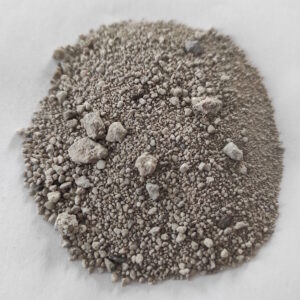
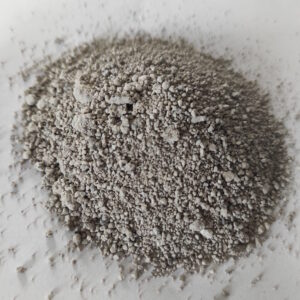
Blast Furnace Slag
Blast furnace slags are formed in the blast furnace during iron production.
This process can be simplified as follows: iron ore or pellets are heated, and reducing agents such as coke and others are burned, producing carbon monoxide gas, which reduces the iron ore or pellets into liquid hot metal.
During production, the chemical combination of fluxes, residues from carbon sources, and non-metallic components of iron ore leads to the formation of non-metallic liquid blast furnace slag. Molten metal and liquid slag accumulate in the blast furnace. Due to its lower density, blast furnace slag forms a layer above the molten iron and can be separated. When released, blast furnace slag has a high temperature of about 1500°C.
After being separated from the metal, hot blast furnace slag can be processed in several ways. The two main methods are as follows:
1. Air-cooled blast furnace slag (ACS): The liquid slag is poured into a slag dump, where it slowly cools in the air and solidifies. The slag dump consists of a high natural or artificial slope, with railway tracks laid on the edges for slag carriers. This process results in a crystalline structured mass known as air-cooled blast furnace slag (ACS).
2. Granulated blast furnace slag (GBFS): This is obtained from liquid hot blast furnace slag by rapid cooling in a stream of water. When quickly cooled with a large amount of water, a glassy/amorphous granulated or sand-like product is formed, known as granulated blast furnace slag (GBFS).
Our blast furnace slags have undergone the necessary examination at в «FEhS – Institut für Baustoff-Forschung e.V.» (Duisburg) and registered with «European Chemicals Agency» (ECHA) under «Regulation on the registration, evaluation, authorisation and restriction of chemicals» (REACH).
They meet the most stringent criteria for succulence and carry a certified «Safety Data Sheet».